Pages

Saturday, January 24, 2015

Sausage Lovers Paleo Supreme Pizza


I first learned the concept of a meatza from Melissa Joulwan, author of Well Fed. While I can't take credit for the meatza concept I do take credit for these seasonings. Honestly, I think this is better than the traditional pizza served on a doughy crust. Instead of dough, my crust is made of homemade Italian sausage. I like to make my own sausage because not only can I control the seasoning but I can also assure the quality of meat and how it was raised.

For the crust:

1 lb ground pork
1t salt
pepper
1t granulated garlic
1t fresh rosemary finely chopped
1/4t ground oregano
1/2t fennel seeds
1/2t onion powder
1/4t crushed red pepper flakes

Combine the ingredients above with your hands and then press into a cast iron skillet. I used a 10" skillet. (11" at the top and 10" at the bottom) You could also use a 9" pie plate or something similar. Then put the crust into the oven at 400F for 15 minutes without toppings.

While the crust is baking mix up this no-cook pizza sauce:

2T of tomato paste
1C of strained tomatoes
1/2t salt
1/2t garlic

I know most people think that eating well is too difficult so I purposely made this sauce easy to throw together. You want the sauce to be thicker rather than thinner. If it's too thin it will get watery in the oven. It won't taste bad but you'll lose some of your sauce.

Remove the pizza crust from the oven and hold the crust in the pan with a spatula as you tilt the pan to drain the grease. Melissa transfers the crust to a baking sheet lined with parchment paper. Either will work.

Supreme pizza was my favorite before I adopted my paleo lifestyle and this pizza definitely fills that craving for me, and then some. Add as much sauce as you like. If any is remaining store it in the freezer for a quick addition to another dish. You can top this pizza however you wish. I thinly sliced green peppers, onions, and mushrooms and then layered pepperoni, the large size, from Applegate farms on top. Omit pepperoni for Whole 30 unless you can find pepperoni without sugar.

Return the pizza to the oven for another 15 minutes and then enjoy

Tuesday, October 21, 2014

Smoked Nuts and a Chemistry Lesson on BHT Butylated Hydroxytolulene


There are so many snack mixes available yet very few are paleo friendly. Most contain wheat, dairy, or an inflammatory oil like corn, soy, or canola. Even if you are not following the paleo lifestyle you will definitely gobble these up. I tested them on a few friends and they couldn't eat them fast enough. Hence, they are one of my kitchen creations that instantly became "blog worthy".

Make sure the nuts you use are raw and do not contain any inflammatory oils or salt. In the photo above you'll see that I used cashew pieces instead of buying the whole nut because they are significantly cheaper that way. You can also buy nuts in the bulk section of the grocery store so that you only have to buy what you will use in the near future. Oils in nuts can become rancid over time so store them in a cool place to slow down this process.

Combine a cup of each: almonds, pecans, cashews. Then add 1/2 cup of pumpkin seeds. In a separate bowl combine cumin, garlic, salt, onion, and salish with 2T of oil using a whisk if you need to break up any spice clumps. Toss the nuts with the spice mixture and spread them evenly on a baking sheet lined with parchment or a silicone mat and bake at 350 degrees for 15 min.

Something I was surprised to discover was that the pecans roasted this way tasted a lot like pretzels. I love pretzels so it was a nice surprise to find a paleo friendly version.

Spice Mixture
2T Oil of your choice*
1/2t salish (smoky salt. I found it in the bulk spice section at Whole Foods.)
1/2t onion powder
1/2t salt
1t ground cumin
1t garlic powder

Flavor Variation (non paleo) but reminds me of Chex mix
reduce cumin to 1/4t
use 2T of ghee instead of oil
add 2t worcestershire

*When I first made this recipe I did the big no-no of using Olive Oil because it was the only neutral tasting oil I had available. Finding the perfect fat to cook with seems daunting these days because so many of our choices are inflammatory oils or oils, like Olive Oil, that break down at high temperatures. When I made the "Chex Mix" variation I used ghee because it has a smoke point of 450F. I've missed eating Chex Mix for years and so I ate quite a bit of this mix in one sitting. Then I had a reaction similar, but not as intense, as the one my body has to dairy, so ghee is off the table for me. So a neutral tasting oil with a high smoke point that isn't inflammatory looks to be avocado oil.

Worcestershire isn't paleo because it contains sugar and the ever questionable natural flavorings. I figured at 1g of sugar per teaspoon the impact wouldn't be that significant since only 2 teaspoons were being used. Looking for a better alternative I discovered Michelle from Nom Nom Paleo recommends The Wizard's Worcestershire sauce. Looking over the ingredients it still contains sugar, same amount as my Lea & Perrins, but at least the ingredients are all organic and there is a gluten free version.

The Chex Mix StoryI used to love Chex Mix but I quit buying it years ago when I discovered it was preserved with BHT. One day I had the pleasure of testing BHT in the laboratory and it's a very fine white powder that smells almost exactly like moth balls. Moth balls keep bugs away and BHT is a preservative which had me quickly wondering what BHT does on a cellular level. Working in a lab I had access to all of the MSDS sheets of the chemicals we worked with. That is when I began reading food ingredient labels with a very close eye. It's appalling what they allow into our food. The quote below is from section 11 of the MSDS. Follow the MSDS link to learn more.

MSDS Toxicological information of BHT (Butylated Hydroxytolulene)
 Routes of Entry: Absorbed through skin. Dermal contact. Inhalation. Ingestion.
Toxicity to Animals: Acute oral toxicity (LD50): 650 mg/kg [Mouse].
Chronic Effects on Humans:
CARCINOGENIC EFFECTS: A4 (Not classifiable for human or animal.) by ACGIH, 3 (Not classifiable for human.) by IARC.
MUTAGENIC EFFECTS: Mutagenic for mammalian somatic cells. Mutagenic for bacteria and/or yeast. May cause damage to the following organs: blood, liver, central nervous system (CNS).
Other Toxic Effects on Humans:
Hazardous in case of skin contact (irritant), of inhalation (lung irritant). Slightly hazardous in case of ingestion, .
Special Remarks on Toxicity to Animals: Not available.The Wizard's Worcestershire sauce
Special Remarks on Chronic Effects on Humans:
May affect genetic material (mutagenic). May cause cancer based on animal test data. No human data found. May cause adverse reproductive effects and birth defects (teratogenic)
Special Remarks on other Toxic Effects on Humans:
Acute Potential Health Effects: Skin: Causes mild to moderate skin irritation. Eyes: Causes moderate eye irritation. Inhalation: May cause respiratory tract (nose, throat) irritation. Ingestion: May be harmful if swallowed. The clinical manifestatioins of acute are not well known. May cause gastritis, vomiting, hypermotility, diarrhea. May affect behavior/central nervous system(dizziness, weakness, somnolence, slurred speech, ataxia, visual and auditory hallucinations, headache, confusion, temporary loss of conciousness), respiration (respiratory depression), blood (reduced ability to clot) Chronic Potential Health Effects: Ingestion: Prolonged or repeated ingestion may affect the liver, kidneys, thyroid, adrenal gland, behavior/central nervous system and learning ability, blood(reduced ability to clot), and may cause weight loss. Ingestion or skin contact may also cause allergic reaction (dermatitis, asthma)

Tuesday, September 16, 2014

Pork Chops With Mushrooms and a Rosemary Pan Sauce

Before I began this post I had to do a little research on whether or not wine is paleo so that I could figure out what labels to give this post. Technically alcohol isn't paleo but it doesn't seem to be a hard and fast rule. From what I read most people avoid the drinks that contain gluten and they moderately enjoy red wine for the health benefits of resveratrol. I had to look it up because there is 1/2C of white wine in this recipe but it is reduced to remove the alcohol. So the way I see it you'll end up with a touch of sugar. For those on Whole 30 definitely don't add the alcohol but if you are paleo, it's up to you. If you omit the wine you may need to adjust the thickness of the sauce with a touch more stock.


This is one of those dishes that doesn't take much time to make so this would be great for a weeknight dinner and for those who do not eat pork, chicken would also work in this recipe.

Chop 6 cremini mushrooms and 2 cloves of garlic before you begin. If you'd like more mushrooms, a different type, or no mushrooms feel free to adjust the recipe.

Generously salt and pepper 6 thick cut pork chops. Over medium / medium high heat add just enough oil to lightly cover the bottom of a stainless steel skillet. If you add too much it just creates more splatters for you to clean up later. I also recommend stainless over non-stick because you'll get better browning. Cast iron would work if you are not using wine. I find that ingredients with a lot of acidity tend to develop a metallic taste when cooked in cast iron unless the iron is coated with ceramic.

Before you begin let me give you a heads up. While you are cooking, fond is going to develop in the bottom of the pan. These brown bits are going to help us create our pan sauce so keep on eye on them and turn down the heat if you need to to keep them from burning. If the fond burns then we won't be able to use them for a sauce. No worries, the stock and arrowroot can be heated together in another pan to create a sauce but the flavor won't be as good.

When the pan is hot place the chops into the pan laying them away from you so that any splatters will most likely jump away from you. If you do not hear a sizzle when the meat touches the pan then it is not hot enough so wait and try again. I find that if I move the chops a little after they are added they won't stick on the bottom of the pan as much. Either way, when they are brown and ready to flip they should release from the pan on their own.

After both sides of the pork chops have been browned transfer them to a plate and add the mushrooms. You may need to add more oil or ghee to the pan to cook the mushrooms. Initially the mushrooms will absorb the oil from the pan and when they are just about done you will notice that most of the oil will reappear in the pan. I prefer my mushrooms pretty dark but I think the fond will ultimately determine how brown you can get them. About a minute or so before the mushrooms are done add 2 cloves of finely chopped garlic to the pan and saute for the remaining minute.

Add 1/2C of white wine to the mushrooms and garlic and allow it to cook until nearly reduced by half. Use a wine that you enjoy drinking. For this recipe I used a riesling. In a measuring cup dissolve 2t of arrowroot in 2C of cold broth, either chicken or mushroom, and add it to the pan. It is fine if the broth is room temperature, just not hot, because the arrowroot won't dissolve properly in hot liquid. Using a whisk, or whatever tool you like, stir the broth making a point to scrape up the brown bits from the bottom of the pan. When the sauce begins to boil it will thicken. If you'd like it a little thicker use just enough cold water to dissolve another teaspoon of arrowroot and add it to the sauce. Return the pork chops to the pan and turn the heat down to medium and let them simmer for a few minutes. If you suspect they did not cook completely during the browning process because they are a thicker cut, place a lid on the pan and let them simmer for a few minutes.

At the very end add a whole sprig of fresh rosemary about 3-4" in length to the sauce and submerge it. Let it simmer in the sauce for a few minutes and then give the sauce a taste. I only cook it in the sauce for a few minutes because I prefer it with a hint of rosemary so that it doesn't overpower the other flavors of the sauce. If you'd like more of a rosemary flavor simply cook it a bit longer. Adjust the seasoning with salt and pepper if you need to.

Remove the rosemary and serve. I'd say this recipe is roughly 30 minutes start to finish.

6 chops
6 cremini mushrooms
2 cloves of garlic
1/2C white wine
2C of broth, either chicken or mushroom
2t of arrowroot starch
sprig of rosemary
salt and pepper


Monday, September 15, 2014

My First Whole 30: Looking at Food Differently


While having lunch with a friend I told her about my decision to try a Whole 30 diet for 30 days. If you're not familiar with the diet the goal is to eliminate all inflammatory foods: sugar, grains, dairy, white potatoes, legumes, seed oils, and alcohol, in order to "reset" the body's immune response. By eliminating constant sources of inflammation the immune system is allowed to return to normal. She told me that she doesn't think she has the willpower to be that strict for a month and asked how I was going to do it. 


Source
Making the suggestion that people try the Whole 30 I feel like Laurence Fishburne in the Matrix. There is a red pill and a blue pill and you must decide. One will keep everything the same and the other will change your life and your health in so many ways that the odds of you turning back are slim to none. I must warn you though, as I've cleaned up my diet I've become sensitive to the things I've given up. That is, once I give something up I can't go back. I'm not saying this will be true for you but it has definitely been the case for me.

My motivation for sticking to the Whole 30 is the muscles of my body. They have been tight for as long as I can remember. Muscles in my back and feet crunch when you run your fingers over them and I'd give anything for them to let go. I'd rather have feet that don't hurt and a back that doesn't ache more than I'd have any of the things that I'm giving up. I'm not sure if a Whole 30 will work but I'm a firm believer that you are what you eat and chronic inflammation does not do good things to the body. So, I'll let you know.

Day 1: This morning we went to a funeral and in the mix of getting ready and picking up the babysitter I didn't have much time for breakfast. So I packed a pear and a bag of almonds to eat in the car. They got me through the service. After we left my husband suggested a lunch date since the little one was already occupied with babysitters. We don't have any family in town so dates are few and far between so I jumped at the chance. My husband chose the Yard House and over lunch I told him all about the Whole 30. The biggest challenge I had was deciding what to order. Everywhere I looked there were potatoes, soy sauce, wheat, sugar, corn, or cheese. I just assumed I'd get a salad with chicken but they all had one of these offenders. Sure I could have ordered it without _______ but I wasn't excited to eat a bowl of lettuce without dressing and very few toppings. Part of me simply wanted to leave. I'd ordered a burger there before without the bun but all of their burgers came with either fries or one of their salads. I had settled on a bunless burger with a boring salad when my husband orders steak and shrimp. Well heck, if you're having steak I might as well too. So I had the filet that came with a side of vegetables. If you can't tell I hate to be one of "those people" at restaurants who make many special requests but I'm learning that I might have to just get over that.


source
Like I've read on many blogs the first day isn't that big of a deal physically. Figuring out what to eat is the real trick. It seems that most things that are quick to eat fall into one of the do not eat categories. Since most people think they are short on time and often opt for convenience is probably why this diet seems like such a huge challenge. A piece of fruit, handful of berries or nuts, or a vegetable salad are all quick and easy. After reading that last sentence most of you are probably thinking that you will die of starvation on this diet. That is the gluten talking. The first week I gave up wheat I felt like I was going to starve and then it went away. Now when I get hungry it's more of a gentle reminder rather than an all consuming pain.

Although I'm writing about my day 1 experience, I'm actually on day 4 physically. Reading over about other people's experiences with the Whole 30 many feel horrible day 2-4~ish. (
Read other takes on the first week to 30 days from: Whole30.combrockpaperscissorsblog.com, and limitless365.com.) Day 2 and 3 were slightly rough for me but not to the extent that I think some people have experienced. My advice would be to give up gluten for a week before you start so that you're not hit by so many withdrawal symptoms all at once. What's most disturbing to me is that people have withdrawal symptoms when they stop eating many of the staples of the American diet. I don't think it should be that way. I only eat fresh strawberries in the summer and I don't have withdrawals over the winter.


Day 2: I have a headache and I feel like I could sleep all day. Just let me lay here and do nothing. Not going to happen, I have a 3 year old who starts his day jumping on the bed and maintains that level of energy all day. 
Tonight I wanted to rip into a bag of marshmallows. Instead I had pickled asparagus I bought at the farmers market wrapped in ham. I also have raw cacao nibs in the refrigerator that I'll eat a handful of when I get a sugar craving. So far it has worked. The biggest challenge has been eating out. It is very difficult to find something on a typical restaurant menu that doesn't contain: potatoes, cheese, soy, corn, gluten, grains, or sugar.


Day 3: Spices:
I've heard people say that eating healthy is boring. Instead I'm learning that I enjoy food so much more because everything isn't served on a starchy canvas. Today I cooked up a few dishes for the next few days and these are the spices I used:

  • allspice
  • cinnamon
  • cumin
  • arbol chili
  • pepper
  • curry powder
  • smoked paprika
  • coriander
  • cayenne
  • coconut aminos
  • bay leaf
  • mint
  • garlic
  • onion


Breakfast-Ratatouille with Poached Eggs


http://www.bbcgoodfood.com/recipes/10382/easy-ratatouille-with-poached-eggs


The Best Chicken You Will Ever Eat 
From: Well-Fed
http://theclothesmakethegirl.com/2009/06/09/the-best-chicken-you-will-ever-eat-ever/

Oven Roasted Caluiflower
Emeril Lagasse
(omit cheese)

http://www.foodnetwork.com/recipes/emeril-lagasse/oven-roasted-cauliflower-with-garlic-olive-oil-and-lemon-juice-recipe.html

Day 4: Holy wow, I feel amazing! After going to bed at midnight I was up at 7:15 and ready to go without an alarm clock. In our house I'm known for coining the term: "sleepin'", as in, "leave me alone". So, for me to be excited to be awake that early is an anomaly. We'll see if it continues. The biggest change I've felt is an unbelievable sense of peace. I spend most days sun up to sun down alone with a 3 year old because my husband works 12 and 24 hour shifts. I've often wished I could trek to the Himalayas to go meditate with the Buddhist monks to find that inner calm you hear in their voice. I now feel like I have some of that and my body doesn't feel like someone has turned the electricity up too high. I don't really know how to explain it with words other than an amazing sense of peace.


Day 5: I think my husband thinks I'm crazy when I tell him about the sense of peace I have. I've tried to explain to him that you can't know what it's like or what you're missing unless you do it. I no longer feel like my body is fighting itself and my shoulder muscles that have always been incredibly tight are beginning to soften on their own. On the Whole 30 website they have an A-Z list of medical conditions and people have given their testimonials on how the diet has influenced them. So don't just take my word for it. Check into it. There is a lot of information and advice from people who have done this more than once.

I just used the word DIET and it reminded me that weight is not a factor during the Whole 30. In fact, you're not supposed to weigh yourself for 30 days. So please don't get caught up in the numbers. I've never owned a scale myself so this one was easy for me.

Day6-7: What I'm learning about paleo is that you have to have a plan. Your quickest snacks are going to be raw fruits, vegetables, and nuts but eventually you will want something substantial to eat. Whether you go paleo or not I think the paleo approach is genius. Why spend an hour in the kitchen every night when you can spend 2 hours and have food for the week that is ready in minutes? No plastic trays or ridiculously small portion sizes here, just real food.

Week 2: Removing sugar, dairy, grains, legumes, alcohol, and vegetable oils I continue to feel amazing and I have this incredible sense of peace. It's the #1 reason I'd recommend a Whole 30 to everyone. With this crazy world who couldn't use more peace in their life? 
Melissa Joulwan has a post on her blog TheClothesMakeTheGirl.com listing 30 Reasons to do a Whole 30. Initially I was skeptical but now, 2 weeks in, I completely agree with all 30. I'm excited to see what happens in the next 2 weeks but these first two have really made me think about the American Diet and it makes me sad. A month or so ago I joined a local city councilman in taking the FedUp Challenge. For 10 days I didn't eat any foods with sugar added to them. The biggest lesson I learned is that sugar is everywhere. Start looking around your pantry for the 309 names of sugar and remember that the ingredients listed first have the highest content in the product.  


When I go to a restaurant, walk through the grocery store, or I'm simply looking for a quick bite to eat is when I feel sad. There are very few choices that comply with the paleo lifestyle which is strange because I think without modern technology paleo is what everyone would eat. I know so many people who are sick and stressed out and when you walk through a supermarket the aisles are full of sugar, grains, dairy, and inflammatory oils. It makes me sad to see shopping carts go rolling by that are full of chemicals and inflammatory ingredients. I check out shopping carts because I'm a foodie and I'm looking to see if I missed something terrific. Then there is the part of me who used to work in a lab 20 years ago and I've been reading food ingredient labels ever since. The more you learn about the food on the shelves the less you will likely buy. Start paying attention. Start checking out shopping carts and see if you see a trend.


So not only is the majority of food on grocery store shelves working against most people, they are then told to borderline starve themselves and that they must also have a gym membership to see results. I know people and so you do. They have tried losing weight with this method for years and each time they resume eating normally, it's not natural to starve yourself indefinitely, they always end up with more weight than they started with. One of the ways I think diets sabotage people is that they allow for cheat days. With the Whole 30 I had cravings in the first week but once I broke down those chemical cravings by not eating, let's say sugar, then I no longer had those cravings. I think by allowing cheats in any diet people never get over their addiction to things like sugar. Sugar is addictive like a drug so if people don't give it up completely how can they ever break the addiction? Will I never eat sugar again? No. I'm too much of a foodie and I recognize that sugar is a key component to balancing flavor. For me the difference is that I'll be aware of choosing to add maple syrup or honey to a recipe and I won't load up on sugar like someone looking for a fix. If you've ever hit the leftover Halloween candy dish hard like I have in the past you know the feeling you get from binging on sugar.

Basically in 2 weeks it's all come down to one simple concept. If it doesn't make you feel good, why are you doing it?


The Testing Phase
I finished my Whole 30 a week ago and I've been in the testing phase; after the inflammatory foods have been removed you try them out individually and see how your body responds. So far I've had some pretty extreme reactions to dairy and potatoes. In my opinion, the testing phase has been the hardest for me. To eat something and in a few hours have a pounding headache, dizziness, and a funky taste in your mouth that makes you wish you could vomit, in hopes of ending your misery, is not my idea of a good time. That has been this former cheese lover's reaction to dairy. I didn't plan it but I'm thankful I chose to do my testing at dinner because if I don't feel well I can simply go to bed early and sleep it off. My symptoms aren't as intense the next two days but things are also not normal. 


Dairy is definitely off the table and I'm finding that other foods don't work either. I made a recipe that called for raw honey as a sweetener and I felt like I had a continuous hot flash for the next 4-5 hours. My sensitivity to sugar has definitely increased because I taste sugar in foods that I don't think are meant to be sweet and those that are sweetened for the American palate I now turn away. One morning I pulled the bacon package from the trash because I wanted to see if there was more sugar than bacon in what I was eating. The corn chips at Chipotle taste like sopapillas and I expect there to be a drizzle of strawberry sauce and whipped cream on top. A barista told me that the matcha was naturally sweetened which in a momentary lapse of judgement I thought she was talking about the matcha itself. I took one sip and ended up throwing my iced matcha away because it was sickening sweet. So a few paragraphs back where I said I'd go back to sugar, I haven't and I'm now 2 weeks past the end of my whole 30.

Potatoes now give me tummy troubles and I'm pretty sure my body is not a fan of the entire nightshade family (tomatoes, peppers, and eggplants). Nightshade elimination isn't part of Whole 30 but one morning I made a ratatouille (above) and I didn't feel great afterwards so I've been paying attention ever since. I'm finding it difficult to fall off the Whole 30 wagon and I'll most likely eat paleo-ish for the rest of my life because I feel so much better. I'm sure you've done something that gave you an ah-ha moment where you could no longer see life through the eyes you wore before the event happened. That is what Whole 30 has done for me and, yes, there are people who suspect I may be crazy (it's evidently common among paleo people), but it's opened my eyes to our food system in a way I never could have imagined.


Looking at Food Differently
I've been eating these foods for nearly 40 years and I only gave them up for a month. Now I'm finding that a number of them now make me sick. It's made me stop and think. If I had continued with my previous diet would my life expectancy have changed? Would I have developed some sort of disease? These questions can never be answered but it makes me think about the American diet. Grains, Dairy, Sugar, and Vegetable Oils are served at nearly every meal and snack. Did you know that 70% of Americans take a prescription medication? Antidepressants, and painkillers are 2 of the top 3 classes of drugs prescribed. There are people who genuinely need anti-depressants but seriously, read up on Whole 30; one of the reasons people recommend it is the overwhelming sense of peace it brings. 


I think painkillers are definitely called for in acute injuries but it's those who take them for chronic pain that have me concerned. Life shouldn't physically hurt everyday and food shouldn't make you sick. I wonder how the health statistics in America would change if everyone gave up inflammatory foods.

Of the ten leading causes of mortality in the United States, chronic, low-level inflammation contributes to the pathogenesis of at least seven. These include heart disease, cancer, chronic lower respiratory disease, stroke, Alzheimer’s disease, diabetes, and nephritis (Centers for Disease Control and Prevention 2011; Bastard et al. 2006; Cao 2011, Jha et al. 2009; Ferrucci et al. 2010; Glorieux et al. 2009; Kundu et al. 2008; Murphy 2012; Singh et al. 2011).

It All Starts With Food


I'm sure some will say that I'm doing this in reverse by reading the book after making the changes but I'm 100 pages or so into the book written by the creators of Whole 30. I bought it because I wanted to learn their rationale and science for coming up with this eating lifestyle. It's really very simple:

The food you eat either makes you MORE HEALTHY or LESS HEALTHY. Those are your options. - It Starts with Food
We know that the majority of the American diet is inflammatory and we can also see the toll it takes on our health. So remove the inflammation and health conditions are either greatly reduced or eliminated. It's so simple. There aren't many books I come across that I think EVERYONE needs to read but It Starts With Food is definitely one of them. 


Ill health is not your fault. An inability to lose weight is not your fault. Our food system was designed this way by playing on the flavors our genetics make us crave in order to drive profits. Let's go with sugar as an example. If we were hunter gatherers sugar would be difficult to come across. So our taste buds are sensitive to it because it is a quick source of energy. 


There is a much greater explanation in the book but this is my summary of a chapter that was a huge eye opener for me:

In the modern world sugar is everywhere and chronically elevated levels of blood sugar lead to an accumulation of body fat and triglycerides. That in turn leads to leptin resistance. Leptin tells your brain when you are full and when your body is no longer sensitive to it your brain will drive you to eat more sugar/simple carbohydrates because it thinks that you are too thin and it is trying to put on weight. Trying to accumulate weight it also slows down your thyroid which plays a key role in the body's metabolism. (An active thyroid equals an active metabolism and vice versa.) Then you try a "diet" where you greatly reduce your calories and kill yourself in a gym and the body releases more cortisol, which also slows down the thyroid. Cortisol, the fight or flight hormone, directs the body to look for a quick source of fuel. That lands you back on to the simple carbohydrate diet and the cycle keeps repeating. 

My Results 2 Weeks After Whole 30

I can definitely say that I will be paleo for the rest of my life. I've done a few tests on the things I've given up and I can honestly say that none of them taste good enough for me want to feel that bad after eating them. The crunchy muscles have been gone in my feet for weeks and my feet no longer ache. My muscles have never been this loose. I still have some tight spots but I find myself craving a good stretch on the floor and in time I know that they will also let go. I sleep well, I still have a wonderful sense of peace and I have great energy.

The most surprising thing I've gained is great will power in other areas of my life. I don't crave any of the foods that I gave up so will power isn't an issue with food but I'm learning to apply the same outlook to other areas of my life. If it doesn't make you happy, why are you doing it? 


UPDATE

It has been 7 months since I started this Whole 30 and so far I haven't had much success adding foods back. Some things I react to right away and others hit me the next day. I began another Whole 30 in January but it wasn't working for the joint pain I had in my hands. Last year I had the same joint pain during the winter months but I attributed it to practicing massage therapy and turning 40. Now that I knew that my body was reacting to all of these foods I began to suspect it was an autoimmune problem, rheumatoid arthritis. So in the middle of my Whole 30 I switched to AIP (autoimmune paleo). It was tough to follow at first but then with a number of stumbles I think I've finally made peace with it. With AIP all of my rheumatoid symptoms disappear but I've learned that this process is a marathon and not a sprint. Now I'm just looking to see what version of paleo ends up working for me. Here is an article about the beginning of my AIP journey.

Friday, August 29, 2014

Whole 30 Simple Slow Cooker Roast With Gravy


This post is dedicated to all of the people who want to eat better but don't know how to cook or don't like to cook. It's dedicated to those who know that convenience foods aren't healthy but they fall back on them because, well, they're convenient. Eat this roast for dinner; use the leftovers for a salad, sandwich, or a wrap tomorrow; it would even be tasty with a side of asparagus topped with a couple of eggs for breakfast. Use it to make a stew or a stroganoff. When you put your slow cooker to work it is easy to have real food accessible any time of day.

Each shopper values different things so choose the things that matter to you. Here are some of the things that matter to me:

Remember that grain fed beef is full of inflammatory Omega-6's whereas grass fed is full of anti-inflammatory Omega-3's. Cows raised on feed lots contribute to water pollution and they also have significantly higher levels of e.coli. Unfortunately grass fed is more expensive because the government does not subsidize grass, they subsidize corn. Think back to your parents or grandparents generation where they didn't eat huge slabs of meat because it was expensive. Apply those same recipes and stretch your costly cuts with more vegetables. As far as I know Americans definitely have room in their diets for more vegetables. According to choosemyplate.gov half of your plate should be comprised of vegetables. Your best source of meat will be from a local farmer or butcher. You can ask as many questions as you like and see how the animals are raised. Odds are that it will be slightly cheaper than what is found in a supermarket, especially if you buy a package bundle. Buying locally you will know how the animal was treated and you'll also support your local economy.

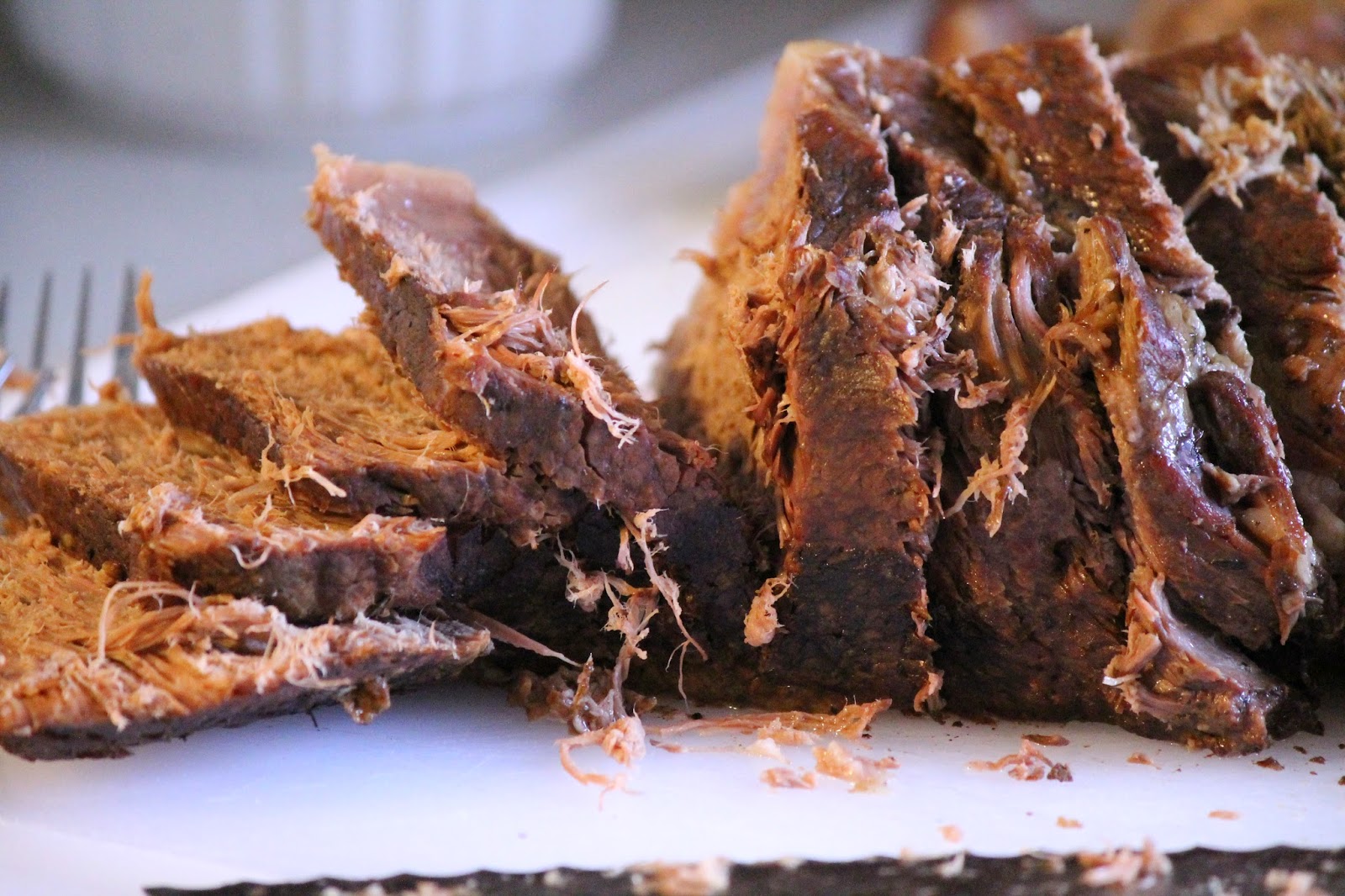
My goal was to put this recipe together with few ingredients but maximum flavor. This recipe also works well for those who are cooking on a budget. Cheaper cuts of meat, (chuck roast pictured), are best suited to a long slow cooking process because they need the extra time for the connective tissue to break down. 


The most crucial step is in the beginning. Browning the roast is where the meaty broth/gravy is created. I have made other recipes by skipping this step and the result reminds me of a sub-par canned stew. Edible, but nothing to get excited about. Trust me, spend a few minutes and brown your roast. In the photo above you'll notice that the roast is sitting on paper towels. Before seasoning with salt and pepper it is crucial that the surface of the meat is patted down with paper towels to remove excess moisture. If the moisture isn't removed the meat will steam in the pan and it won't brown properly. After drying off the roast generously season it with salt and pepper. The roast pictured was 3-4 lbs and I used 1-1.5 tsp of salt and freshly ground black pepper. Brown the side of the roast with the thickest layer of fat first in a pre-heated pan over medium/medium-high heat. This will provide cooking oil for browning the other sides of the roast. Fancy equipment is not required. In the photo below you will see that I used 2 forks to rotate the roast in the pan. Make sure the pan drippings don't burn while you are browning the roast because we're going to use them to help create the gravy for our roast.


After the roast has browned on all 4 sides place it into the slow cooker and add 2 cups of water to the hot frying pan. Using a spoon or spatula, scrape the brown bits off the bottom of the pan and then add the liquid to the slow cooker with the roast. My favorite part about this step is that you've nearly cleaned the pan you just used. To the slow cooker, add 1 tsp of thyme, 2 cloves of garlic, and 1 bay leaf into the liquid. Turn the slow cooker to low and cover it with the lid. That's it! I cooked this roast for 7.5 hours and it was difficult to remove because it nearly fell apart, always a good sign. Place the roast on a plate or a cutting board that has a rim for catching juices and cover the roast with foil to let it rest while you make a gravy. Resting is also important before the roast is cut so that the juices have time to reabsorb. If you cut it right out of the pot it will be dry.


 For the Roast:

3-4 lb chuck roast/pot roast
1-1.5 t of salt
generous pepper
2 C water
1 t dried thyme
1 bay leaf
2 cloves of garlic crushed


For the Gravy:


2 t arrowroot powder
2 c of broth from the slow cooker*
salt and pepper to taste

In a sauce pot on the stove bring the broth to a gentle boil. Dissolve the arrowroot in a tablespoon or so of cold water. It will clump and not dissolve if added to hot liquid. Slowly add the arrowroot while stirring the gravy and remember that its full thickening potential won't occur until the gravy boils. As you can see below this ratio doesn't make a very thick gravy so if you like yours thicker add another teaspoon of arrowroot. I prefer arrowroot to corn starch because I know it is not GMO and it is paleo whereas corn is not.

* Optional: After removing the bay leaf I used an immersion blender to homogenize the broth with the garlic


Roasted Root Vegetables

Carrots can be added to the slow cooker to cook with the roast but I opted for roasted vegetables instead. Dice any root vegetables you like. In this photo I used carrots, parsnips, and a turnip but in the past I've added sweet potatoes, onion wedges, or cloves of garlic with the paper on. Whatever combination sounds good to you.

Toss the vegetables with your favorite oil, salt, pepper, and dry thyme. Roast on a sheet tray lined with parchment paper or a silicone mat at 425 F until the vegetables are tender and browned to your liking. Roasting times will vary depending on the size of your vegetables but it should be somewhere around 45 minutes. 

Thursday, August 28, 2014

Whole 30 Chicken Salad


Although I loved the chicken and stuffing I had for dinner I wanted something completely different the next day. I eyed the spinach in the refrigerator and it became my inspiration. My mind began to race with numerous options and when I saw the homemade mayonnaise I finally settled on chicken salad. Melissa taught me how to make mayonnaise in her Well-Fed 1 cookbook and I haven't bought mayonnaise since. I like being able to customize it and decide which seasonings and oil to use. For this particular batch of mayonnaise I used extra virgin olive oil which gave the mayo a hint of the olive oil flavor.

For 2 healthy servings:

1 T minced shallot
1 T raw apple cider vinegar
1 t dry tarragon
1/2 t salt
1/2 C extra virgin olive oil mayo
1/2 C raw chopped pecans
1/2 C dried cranberries
diced chicken (I used 2 thighs, 1 breast, and 1 leg for this recipe)


Combine shallot, vinegar, tarragon, salt and mayonnaise and stir to form a dressing. Add pecans, cranberries, and chicken. Stir to combine and serve.

Paleo Cooking - Turning 2 Chickens into 3 dishes


Getting the knack for Paleo cooking I'm learning that planning is key. It sounds daunting but really I'm not sure why I never thought to cook this way before. Instead of spending an hour in the kitchen every night heating up the house in the summer, why not spend a few hours making a larger quantity and eat that for a few days? Whether the weekend works for you or put your slow cooker to work while you're at work, doesn't it make sense to make more food so that you can cook less often?

The trouble I've had in the past with this method is that I'm not the biggest fan of leftovers. I can eat something twice but then I need to change it up. So my challenge to myself was to mix cooking in bulk with variety.

In my second week of the Whole 30 challenge I came across a recipe from Nom Nom Paleo for chicken with gravy. Michelle Tam, author of Nom Nom Paleo, is responsible for planting the Whole 30 seed for me so I was excited to try her recipe. I've made gravy with flour or corn starch in the past but both are not allowed in the Whole 30. So when I came across this recipe with gravy that was Whole 30 compliant I had to try it.

Michelle cooks a whole chicken in the slow cooker and I discovered by luck that the 2 cut up chickens I purchased the day before fit perfectly into my pot. Since I used 2 chickens instead of 1 I doubled the amoIf you're like me you're not the unt of vegetables and used what I had on hand. I added mushroom broth instead of chicken stock and Herbes de Provence in lieu of the spice blend Michelle used. As you can see in the photo on the left the chicken simply fell off the bone. You can find the recipe on her blog here.


Crock Pot Chicken and Gravy with Pork Paleo Stuffing

My gravy didn't come out as thick as Michelle's but it was delicious nonetheless. Chicken with gravy makes me think of Thanksgiving dinner so naturally I thought of mashed potatoes. However, the paleo world has yet to decide unanimously whether white potatoes are or aren't paleo. So I decided the next best thing was stuffing. Since grains are not part of the diet I decided to make it with ground pork and concoct my own sausage stuffing. I think I'm beginning to like this paleo thing. Not only do I feel better but I enjoy food more because everything isn't served on a bland starchy canvas. Everything has flavor and this sausage stuffing was fabulous.


1 lb of ground pork
1 large granny smith apple
1 medium onion diced (2 cups)
3 cloves of garlic
3 stalks of celery
1 T of celery leaves
6 fresh sage leaves
1/2 t dry thyme
1/2 t salt
1/4 t allspice
1/2 C mushroom broth
pepper to taste

Add the pork to a preheated skillet over medium-medium high heat. When the pork is 3/4 of the way cooked add the apple, vegetables, and spices and cook until the pork is completely cooked through. Add the mushroom broth at the end and simmer the stuffing, stirring occasionally, until the liquid from the broth has evaporated.

Top the stuffing with your favorite cut of chicken and gravy from the recipe above.

For the green beans: I blanched them in salted water and finished with olive oil, salt, and pepper.

Garden Note: Growing sage is incredibly easy because it doesn't require much water. It's a perennial so plant it in the dry spot of your yard where most plants seem to wither and you'll have fresh sage nearly year round. For comparison of growing conditions I'm in southwestern Idaho where it is very hot and dry but we also get snow in the winter.

Chicken Salad

Although I loved the chicken and stuffing I had for dinner I wanted something completely different the next day. I eyed the spinach in the refrigerator and it became my inspiration. My mind began to race with numerous options and when I saw the homemade mayonnaise I finally settled on chicken salad. Melissa taught me how to make mayonnaise in her Well-Fed 1 cookbook and I haven't bought mayonnaise since. I like being able to customize it and decide which seasonings and oil to use. For this particular batch of mayonnaise I used extra virgin olive oil which gave the mayo a hint of the olive oil flavor.


2 healthy portions of chicken salad:
1 T finely chopped shallot
1 T cider vinegar
1 t dry tarragon
1/2 t salt
1/2 C olive oil mayonnaise
1/2 C chopped pecans
1/4 C unsweetened dried cranberries
diced chicken (I used 2 thighs, 1 breast, and 1 leg for this recipe)

Combine shallot, vinegar, tarragon, salt and mayonnaise and stir to form a dressing. Add pecans, cranberries, and chicken. Stir to combine and serve.


I ended up making a second batch of chicken salad the next day to go with my butternut squash soup.


Butternut Squash Soup

Since I made chicken salad 2 days in a row and I ate the stuffing for breakfast I no longer had anything to put the remaining gravy/chicken broth on. Knowing the many benefits of bone broth I couldn't throw it out. If you ever have extra bone broth I urge you to freeze it and use it another day because as far as I know you can't buy it in stores. With winter on the horizon it's great to have on hand in case anyone gets sick because homemade chicken soup really does help fight a cold.

In a crock pot add the following:

1 butternut squash peeled and diced
2 C leftover chicken broth/gravy
2 C water
1/2 t salt
few sprigs of thyme
1 bay leaf
2 cloves of garlic crushed

Cook on low, or high, until the squash is tender. I made this batch on low and pureed it after 5 hours but this is a recipe that would be difficult to overcook. So if you need it to cook while you're at work, no worries. Puree the soup with an immersion blender or in batches in a traditional blender. Just remember that hot liquids expand in a blender so put a towel over the top and keep a hand on it so hot liquid doesn't go flying around the room. Add salt and pepper to taste.

Variation: Add 1/4 t of curry powder to a bowl of soup for an Indian twist


Monday, July 21, 2014

Slow Cooker Carnitas

A few years ago I took a trip to Mexico and I was looking forward to devouring the local cuisine. As it turned out my ecologically pristine resort was the only structure for miles. The resort hosted a lot of Canadians and I wonder if that is why they tried to cook American/Canadian types of food everyday. The food was edible but definitely not anything to get excited about. During my week long visit they only prepared authentic Mexican food ONE night. When I boarded the airplane to come home I was sad because I didn't get the week long authentic Mexican feast I was hoping for.

Luckily in Idaho there are several fantastic Mexican restaurants and I fall in love all over again with every dish I eat. I rarely order the same dish twice because I love trying new flavors and interpretations of everyday ingredients. Street tacos is absolutely one of my favorite dishes and although I've had them with steak and chicken, carnitas are my favorite.

Definition of Carnitas from Epicurious.com


carnitas[kahr-NEE-tahz]
Mexican for "little meats," this dish is simply small bits or shreds of well browned pork. It's made from an inexpensive cut of pork that's simmered in a small amount of water until tender, then finished by cooking the pieces in pork fat until nicely browned all over. Carnitas are usually eaten with SALSA and are sometimes used as the filling in TACOS and BURRITOS.
© Copyright Barron's Educational Services, Inc. 1995 based on THE FOOD LOVER'S COMPANION, 2nd edition, by Sharon Tyler Herbst.
Read More http://www.epicurious.com:80/tools/fooddictionary/entry#ixzz1szutRqGl

Before I set out to make carnitas I found a recipe on Allrecipes.com 

The initial recipe called for a 4 pound boneless pork shoulder roast and a cooking time of 10 hours. Using pork stew meat and a crock pot setting on high I was able to create very tender pork that fell apart in only 4 hours. A 2 pound package of stew meat fed my husband and I carnitas tacos on two separate occasions. We didn't make any rice or beans, just tacos. So I definitely believe this could be an inexpensive dish for a larger family if rice, beans, or even a salad were included as a side dish. For those who do not eat pork this recipe also works well for chicken. I'm not sure how authentic this recipe is but I think it is a pretty good match to the carnitas I love so much.

When it comes to buying pork I recommend buying from either a farmers market or a local butcher shop where you can ask questions about the raising of the pig. Sadly factory farms don't have the best reputation for the treatment of pigs, or other animals for that matter, so get to know where your meat comes from and what's been done to it.

Ingredients

  • 1 teaspoon salt
  • 1 teaspoon garlic powder
  • 1 teaspoon ground cumin
  • 1/2 teaspoon dried oregano
  • 1/2 teaspoon ground coriander
  • 1/4 teaspoon ground cinnamon
  • 2 lbs of pork stew meat
  • 2 bay leaves
  • 1 cup chicken broth

Combine the dry ingredients and toss the pieces of pork in the mixture. Add the seasoned pork to a slow cooker with 2 bay leaves and pour 2 cups of chicken broth around the edges. The chicken broth should be deep enough to see from the top of the pot but not covering the pork. If the pork is going to cook during an 8 hour work day set it on low. To shorten the total cooking time set the crock pot on high and it will be ready 4 hours later. One of the great things about this recipe is that pork becomes more tender the longer it cooks. I'm not saying to cook it for 24 hours but a few extra hours on either setting definitely won't ruin your dish.

Drain some of the juice from the pork before adding it to either corn or flour tortillas. In my local supermarket I can purchase locally handmade tortillas which are phenomenally better if you can find them. Typically street tacos are topped with chopped white onion and fresh cilantro with a lime wedge on the side. (I thought I had cilantro in the refrigerator but it turned out that I didn't.) Trust me, squeeze the lime juice over the taco and I promise you won't regret it. Onion, cilantro, and lime round out the dish perfectly. If you like a little heat add your favorite hot sauce, pico de gallo, or salsa.


Here's the cilantro! I also made rice with cilantro and lime. After the rice is cooked add fresh chopped cilantro and fresh squeezed lime juice to the rice.


Thursday, July 10, 2014

Apple Pie Breakfast or Snack

I love this dish because not only is it easy but it's like an instant apple pie fix in about 5 minutes. This morning I made the recipe below and I ate ALL of it for breakfast. It's one of the recipes I have been wanting to share for some time however the photos I keep taking with my cell phone haven't done it justice. For our wedding anniversary we decided to invest in a decent camera and now I feel like I may be able to hang with some of these food bloggers with the fabulous photos. Now I just need to step up my creativity and artistic arrangement, eh?


Ingredients

1/2 cup of unsweetened shredded dry coconut
2 organic apples diced (apples have one of the highest pesticide residues, so yes, organic)
1/2 cup of nuts (pecans, almonds, walnuts...whatever you have)
1 T coconut oil
1/2 t pumpkin pie spice
1 T real maple syrup

Cut the apples first because this recipe moves very quickly. Over medium heat toast the coconut flakes and then put them into a bowl. Add the nuts to the same pan and toast them for a minute or two, when you smell them, and put them into the bowl with the coconut. Next add the coconut oil, apples, maple syrup, and pumpkin pie spice and stir to coat. I don't cook the apples any longer than it takes to combine all of these things in the pan. Dump the apples into the bowl of coconut and nuts, stir, and enjoy. For an extra healthy addition try topping it with chia or hemp seeds.

Once you have the gist of how this recipe goes together you can customize it to your liking. If you like more or less coconut or nuts adjust accordingly. If you don't have pumpkin pie spice, use cinnamon and maybe a little allspice and/or clove. 

Mushroom Risotto with Cambozola

While making risotto last night I had a crazy idea. What if I added the Cambozola instead of the traditional Parmesan? If you are not familiar with Cambozola imagine brie with a hint of blue cheese running through it. The official definition of Cambozola: cow's milk cheese that is a combination of a French soft-ripened triple cream cheese and Italian Gorgonzola. It's delicious no matter how you decide to eat it and frankly I can't seem to eat it fast enough when it's around. 

So what if you're the type of person who thinks they do not like mushrooms? (I used to fall into that category until Julia Child taught me how to properly cook them.) As it turns out, like most things, add butter and you can't go wrong. Look at the close up of the mushrooms below. These are not the gray, slimy, mushrooms you get from a can. These are fresh mushrooms cooked to what I can only describe as perfection.


For this recipe I chose cremini mushrooms because I've developed a fondness for them but please feel free to use whatever mushroom or combination of mushrooms you like. Last night I used 6 cremini mushrooms but you can use as many or as few as you like. That is the great part about cooking, food can be customized, within reason, to suit your taste.

Place a medium sized skillet over medium high heat and add 2 T of butter. (Real organic butter or at least non -RBST butter. No funny spreads out of a tub.) This is the trick I learned from my friend Julia: do not add the mushrooms until the foam and bubbles from the melted butter begin to disappear. If you add the mushrooms before this point the butter won't be hot enough. When the mushrooms are added stir them around and you should notice that they absorb all of the butter, no worries, when they are beautifully brown they begin to release some of this butter back into the pan which is your second sign they are done.

When the mushrooms are done put them in a separate container and begin making your risotto in the same pan. Add another tablespoon of butter and begin to saute 1/2 of a medium onion. When it begins to look translucent add 1 cup of aborio rice, risotto rice, and stir to coat. I've tried this with regular rice and it just doesn't work. Regular white rice doesn't cook, even if you stand there adding liquid for 45 minutes, so don't waste your time or groceries. After a minute or so add 1/2 cup of white wine. Last night I used the New Age white wine; I think it cooks up well without being too oaky or too acidic and it's budget friendly.

Allow the wine to reduce to half of it's volume to make sure the alcohol has cooked off and then add 1 cup of hot chicken stock. This is where you have to take into consideration the saltiness of the cheese you're using and the sodium content of your chicken stock. The chicken stock will cook down so the saltiness will intensify as it cooks. This is very important especially if you are using a salty cheese like Parmesan and also why I do not add any salt, if any, until the end of cooking a risotto. I keep an organic chicken bouillon in the refrigerator which calls for 1 tsp per cup of water. In order to cut down on making the risotto too salty I only add 2 tsp to the 3 cups of water. Stir the stock and rice frequently until most of it has absorbed into the rice and then add another cup. Continue this process until you have added 3 cups of liquid. When the third cup of chicken stock has absorbed into the rice give it a taste test and the rice should be cooked completely. Adjust the seasoning with salt and pepper and then turn down the heat to medium low. Add 2-3 Tablespoons of cambozola cheese and stir until it melts. Put the mushrooms into the rice, stir, and enjoy.


Ingredients
6 cremini mushrooms
3 T of organic butter
1 cup of aborio rice
1/2 cup of white wine
3 cups of chicken stock
2-3 T of cambozola cheese